
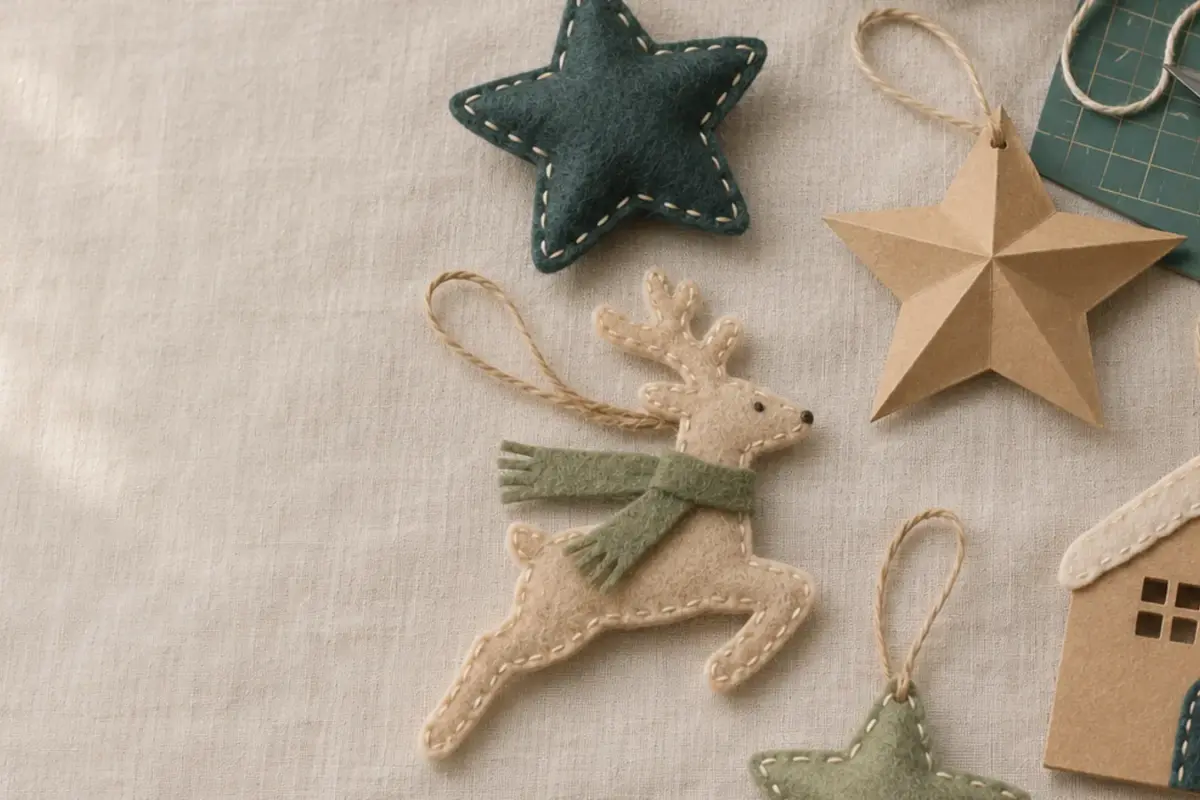
Christmas orders come in a short window, but making them takes ordinary time: test cuts, material ordering, photos, listings, assembly, packing, and shipping. A planning calendar makes the work visible before the order queue fills. Use the weeks below as a sequence, then move them to fit your market dates, production speed, and customers' delivery needs.
This is a planning framework, not a claim about shipping deadlines. Carriers, destinations, weather, and customs can change delivery times. Set your own last order date using current service estimates and a buffer you can support. Write that date on every listing and check it as the season progresses.
Eight to seven weeks before your main selling date
Choose a small product range. Three repeatable items are easier to make well than fifteen untested ones. For example, you might offer a vinyl ornament name, a pressed sublimation mug, and a felt decoration. Decide which are ready-made and which require personalization. Put the file, material, blank, packaging, and estimated minutes per unit in a simple sheet.
Check each design's license now. CraftFile Studio's Personal tier covers gifts and private use. Commercial allows up to 500 finished units per design and excludes print on demand. Extended allows unlimited units and POD. Count by design across all products and sales channels. Keep source SVG, PNG, and PDF files private; customers receive the finished item, not the digital file.
Six weeks out: make and time samples
Cut or print one complete sample of each item using the same materials you plan to sell. For SVG vinyl work, test the smallest letters and the actual blank surface. For sublimation, follow the blank, ink, paper, and press makers' instructions and inspect the finished color. For felt, print the PDF at Actual Size or 100%, measure any test square, and finish one stitched piece.
Record how long each step takes. Include weeding, cooling, sewing, cleanup, and packaging, not just machine time. Note rejected samples and the material they consumed. If a design takes twice as long as expected, simplify it or price and schedule it for the true work. Keep the tested sample as a reference for later batches.
Five weeks out: secure supplies and write listings
Order blanks, vinyl, cardstock, thread, packaging, and spare consumables based on a realistic sales estimate. Check that a replacement supplier could provide matching blanks if the first source runs short. Do not list a color or size you cannot make. Photograph the actual sample in clear light and show its scale beside a familiar object when useful.
Write the listing with dimensions, material, personalization options, processing time, care instructions, and what is included. Say plainly when a name must be supplied and how it should be spelled. Check marketplace rules for production and shipping disclosures. If you use a POD partner, the design needs Extended, and the partner's fulfillment time belongs in the processing estimate.
Four to three weeks out: batch what does not change
Make non-personalized parts in small batches: cut blank ornament shapes, prepare paper backing cards, or prepack common hardware. Keep personalized names and dates for the order they belong to. Label trays by product and stage so a finished item does not get mixed with one waiting for a final check. Reconcile materials after each batch; the first stock estimate often changes once real orders begin.
Use an order log with the promised ship date, product, personalization text, design, license tier, material, and status. Proof names against the customer's exact submitted text before cutting. If an order is unclear, resolve the wording before production. A little space in the calendar for corrections is more useful than filling every hour with new listings.
Two weeks out: review capacity and shipping dates
Count orders already accepted and multiply by measured production time. Add packing and customer service time. Compare the total with the hours you actually have before your last ship date. If the queue is full, shorten the catalog, extend processing times where allowed, or stop taking custom orders. Keep ready-made items separate so you know what can ship quickly.
Recheck the carrier's current estimates for the destinations you serve, including USA and EU shipments if you offer both. International customs can add uncertainty, so avoid promising a specific arrival day you cannot control. Publish a last order date for each product type if a custom felt piece takes longer than a ready-made card. Make the cutoff visible in listings and shop messages.
Final week: pack and close the loop
- Proof each order against the listing and the customer's personalization text.
- Inspect the finished item for loose vinyl, uneven stitching, damage, or wrong size.
- Add the correct care note and any required product information.
- Pack so the item cannot shift or bend during transit.
- Record the shipment and tracking information where the sales channel requires it.
- Mark the design's sold unit count and update remaining stock.
Leave a small amount of time for rework. A damaged package or misspelled name is easier to fix before the last collection day than after it. At the end of the season, record which design sold, how long it took, and which materials ran short. That evidence becomes next year's starting calendar, with fewer guesses and fewer late nights.
Related files
- SVG cut files for ornaments, cards, and decals.
- PNG sublimation designs for pressed gifts.
- Printable patterns for felt and paper products.